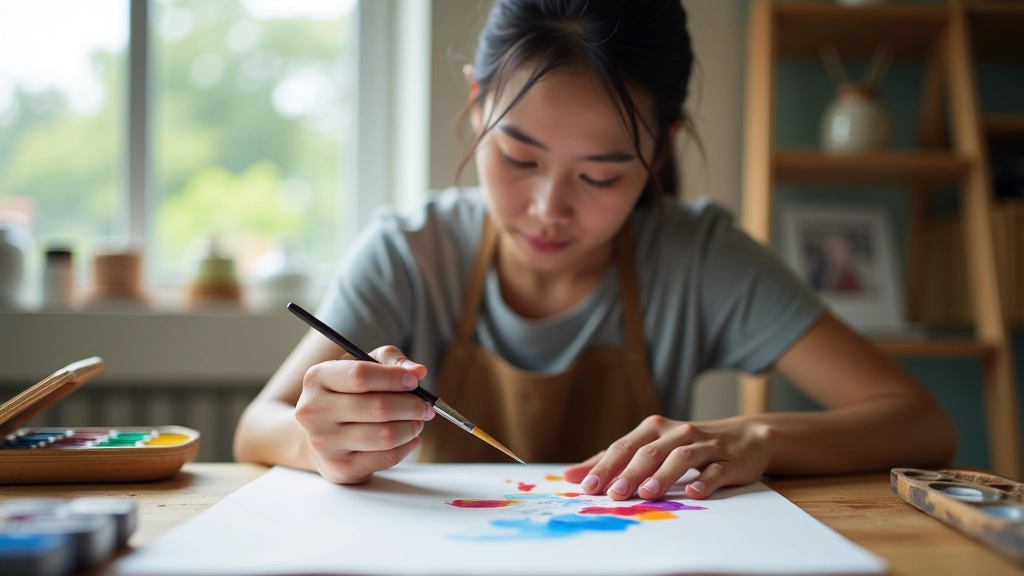
Getting Started with Watercolour Painting
Learn the basics of watercolour techniques without prior experience. We cover materials, foundational strokes, and how to embrace the unpredictability that makes watercolour special.
Read ArticleCreate meaningful collages using mixed media. This accessible art form doesn’t require technical skills and works brilliantly as a tool for emotional expression.
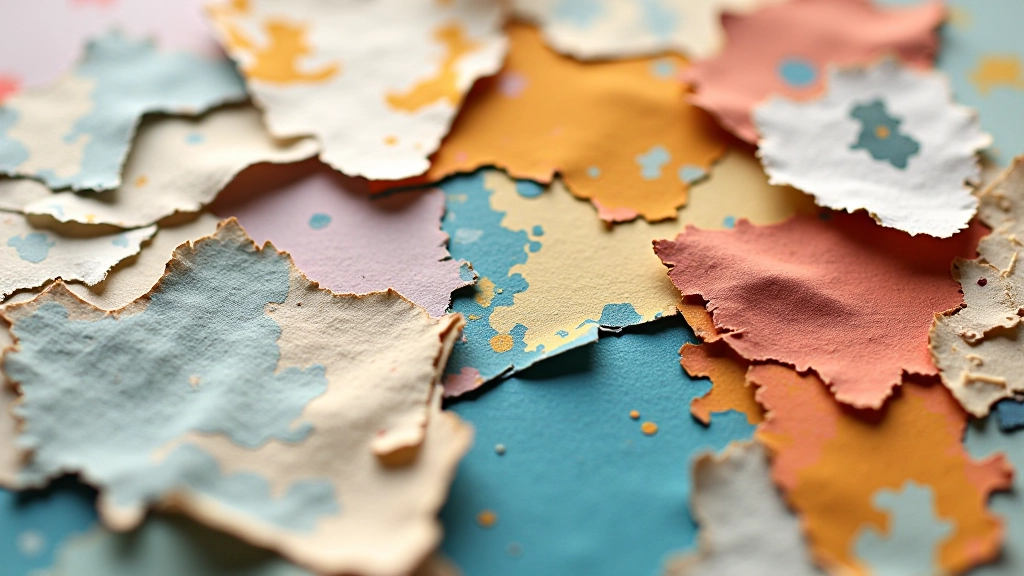
Collage is different from other art forms. You don’t need steady hands, perfect proportions, or years of training. Instead, you’re working with fragments — magazine pages, newspaper clippings, colored paper, fabric scraps — and arranging them into something that represents what’s happening inside your head.
The beauty is that there’s no “wrong” way to do it. A torn edge isn’t a mistake. An odd color combination isn’t a problem. These become part of your story. When you’re stressed about work or feeling overwhelmed, collage gives you permission to just cut, paste, and arrange without judgment. It’s meditative because you’re focused on the physical act — the sound of scissors, the texture of paper, the satisfaction of placement — rather than worrying about whether it looks “good.”
Many people find that 30 minutes of collage work does more for their stress levels than an hour of scrolling on their phone. Your hands are busy, your mind quiets down, and you end up with something tangible that represents your feelings in that moment.
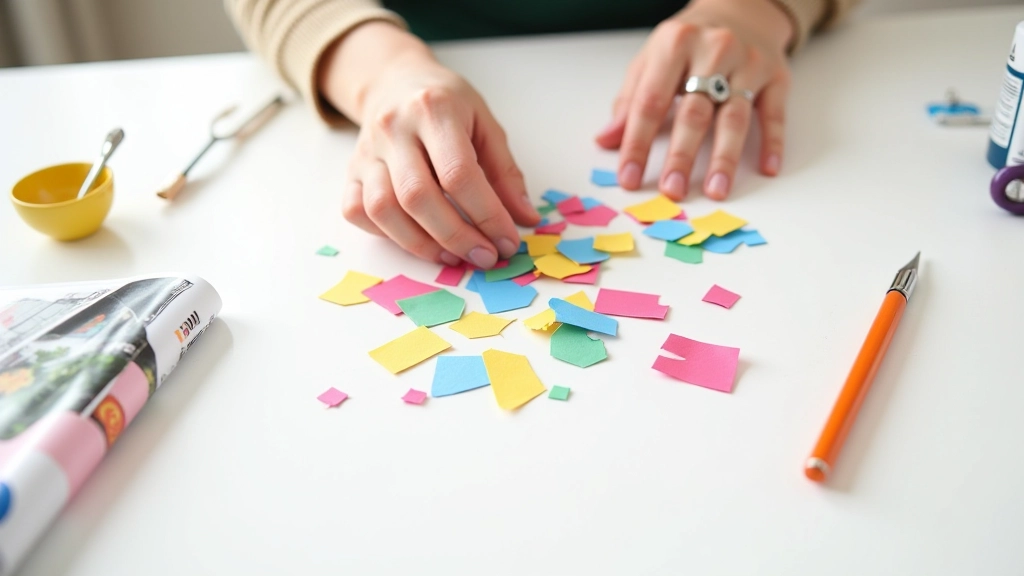
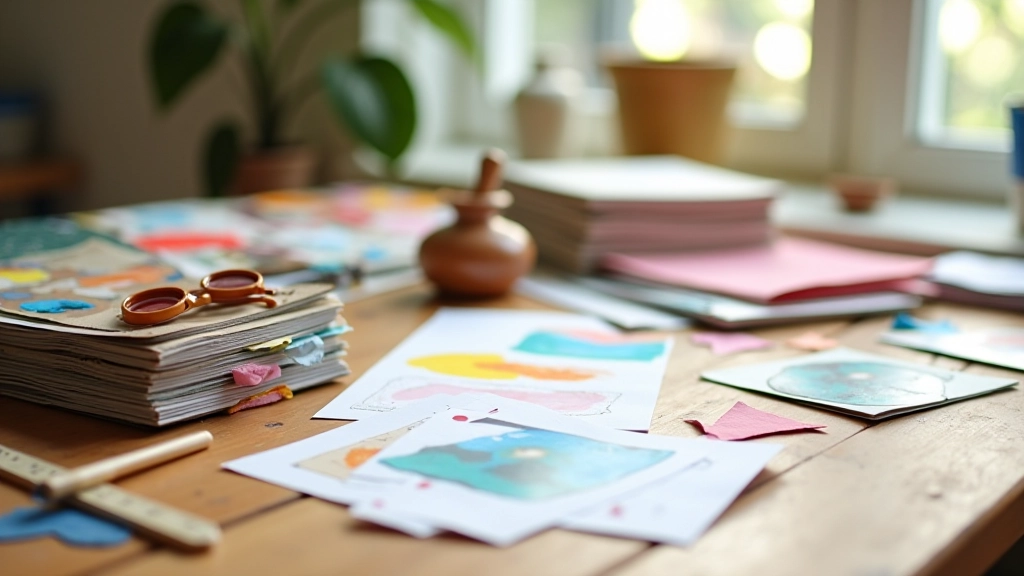
You probably already have most of what you need. Old magazines? Perfect. Newspapers? Even better — they’ve got interesting typography and textures. Colored paper from a stationery shop, fabric scraps from a craft store, or even printed photos work well.
For tools, you’ll want scissors (regular ones are fine, but craft scissors feel nicer), glue (a stick or white glue both work), and a base — cardboard, poster board, or canvas board from an art supply shop. Some people like working on smaller pieces (A4 size) because they’re less intimidating. Others prefer A3 because there’s room to experiment.
One thing that changes the experience: investing in a few quality scissors. They’re usually 10-15 SGD and make cutting through layers of paper feel smooth instead of frustrating. It’s a small detail, but it affects how much you’ll want to do this regularly.
This article is for informational purposes about collage as a creative practice. While collage can be a helpful stress-relief tool, it’s not a substitute for professional mental health support. If you’re experiencing significant stress or anxiety, consider speaking with a mental health professional who can provide personalized guidance.
The simplest approach is layering. Start with one piece — maybe a bold color or interesting texture — and build around it. Don’t plan everything first. That defeats the meditative quality. Instead, let each layer suggest what comes next.
Contrast matters. If you’re using mostly muted colors, a bright accent suddenly stands out. If everything is symmetrical, one asymmetrical element creates visual interest. These principles aren’t rules — they’re just observations about what makes a composition feel alive rather than static.
Try mixing different textures. Glossy magazine pages next to matte newspaper. Smooth fabric beside torn paper. These tactile contrasts make the piece more engaging when you look at it later. And when you’re stressed, you’ll notice you naturally reach for different textures — some people want smooth, calming surfaces; others need the rough, torn quality to match their mood.
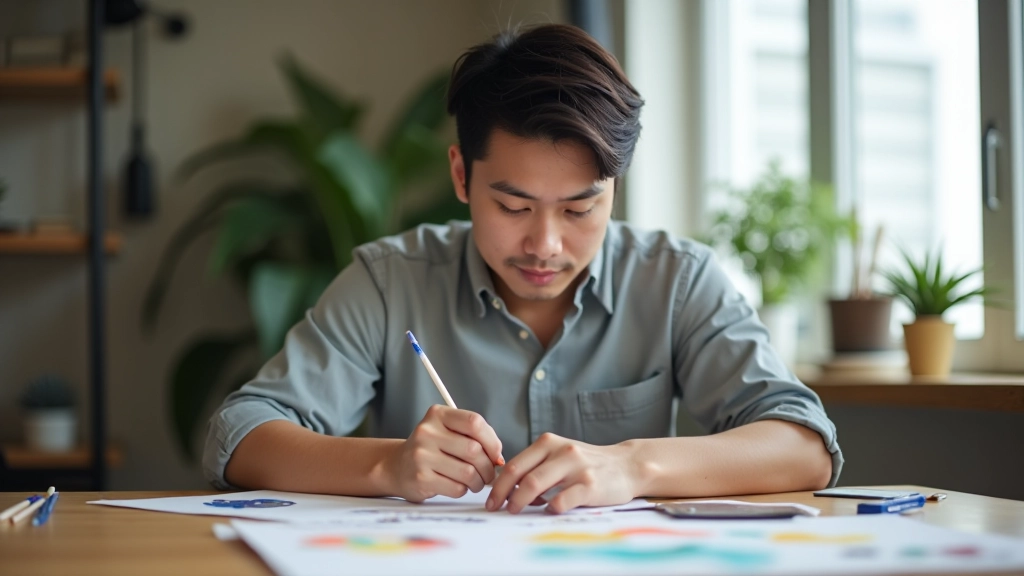
The real benefit comes from consistency. Spending 30 minutes once a month doesn’t build the habit. But setting aside an hour every Tuesday evening? That changes things. Your brain starts looking forward to it. You’ll notice yourself seeing magazine pages differently throughout the week — that color palette, that image, that typography — all potential collage material.
Many people find it helpful to keep a “collage box” — a small container where you save interesting pieces as you find them. Then when you sit down to work, you’re not starting from scratch. You’ve already got materials you’ve been drawn to, which often reflects what’s been on your mind.
After about 4-6 weeks of regular practice, you’ll notice the stress relief becomes more pronounced. It’s not magic — it’s just your nervous system learning that this is a safe, creative space where you can express what words can’t quite capture.
You don’t need permission to make something imperfect. You don’t need to be “good at art.” You don’t need expensive materials or a fancy studio. Collage meets you exactly where you are — frustrated, stressed, curious, or just needing to do something with your hands that feels meaningful.
Grab some scissors, find some paper, and give yourself permission to make something that’s entirely yours. The piece you create matters less than the quiet hour you spend creating it. That’s where the real relief lives.